
Sebastián Boesmi: On Expressions and Reinterpretations
Sebastian Boesmi
On expressions and reinterpretations
During his time in Paraguay in recent months, we had the opportunity to chat with the Madrid-based artist about a wide range of topics, but primarily about digital art and his interpretation of it. Sebastián Boesmi reflects on AI, the relationship with technology, screen time, and the transition between expressive formats and media in his exhibition "Ida y vuelta" (Round Trip), which also featured painting and sculpture, and in which he used abstraction to communicate his message.
A citizen of the world, he chose Asunción to celebrate his 20th solo exhibition. More than a visual artist, Sebastián Boesmi is a prolific creator who, through Ida y vuelta (Round Trip), the name of his exhibition, explores new forms of expression to develop an artistic language.
The exhibition, which took place at the Matices gallery, consisted of two series of works projected at different times, called Unidigital and Imaginary Graffiti, in which he used several techniques that maintain a close relationship and feed off each other: painting, three-dimensionality, animated images and sound.
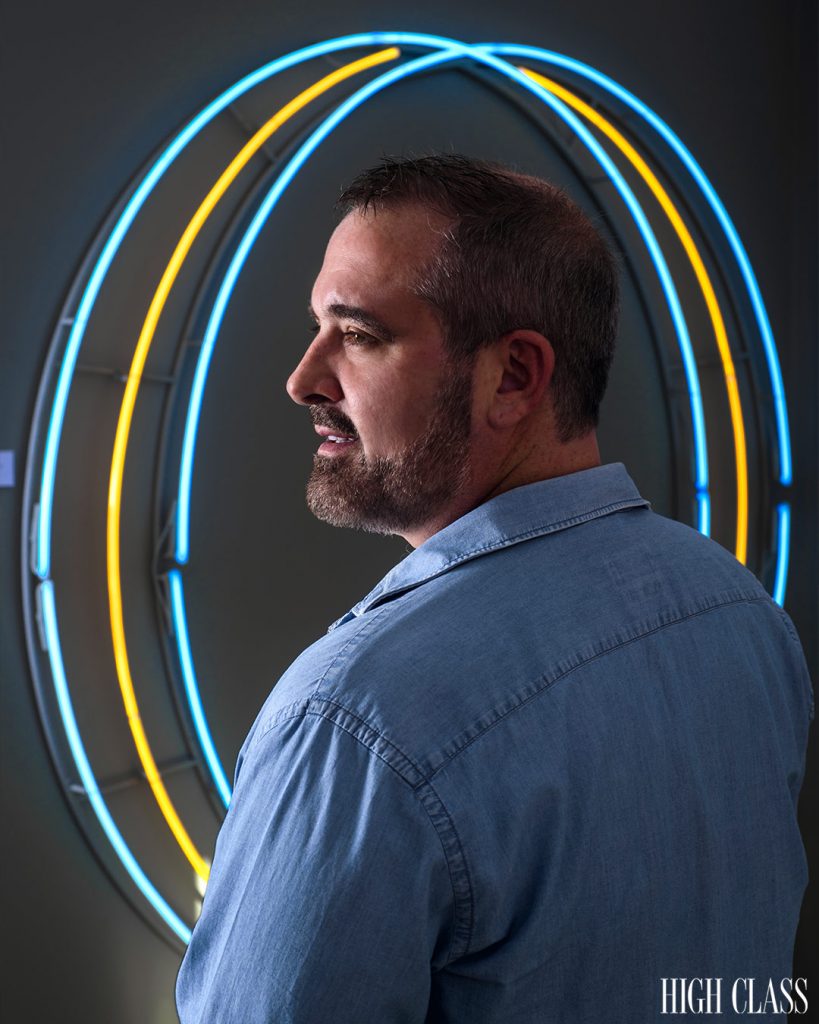
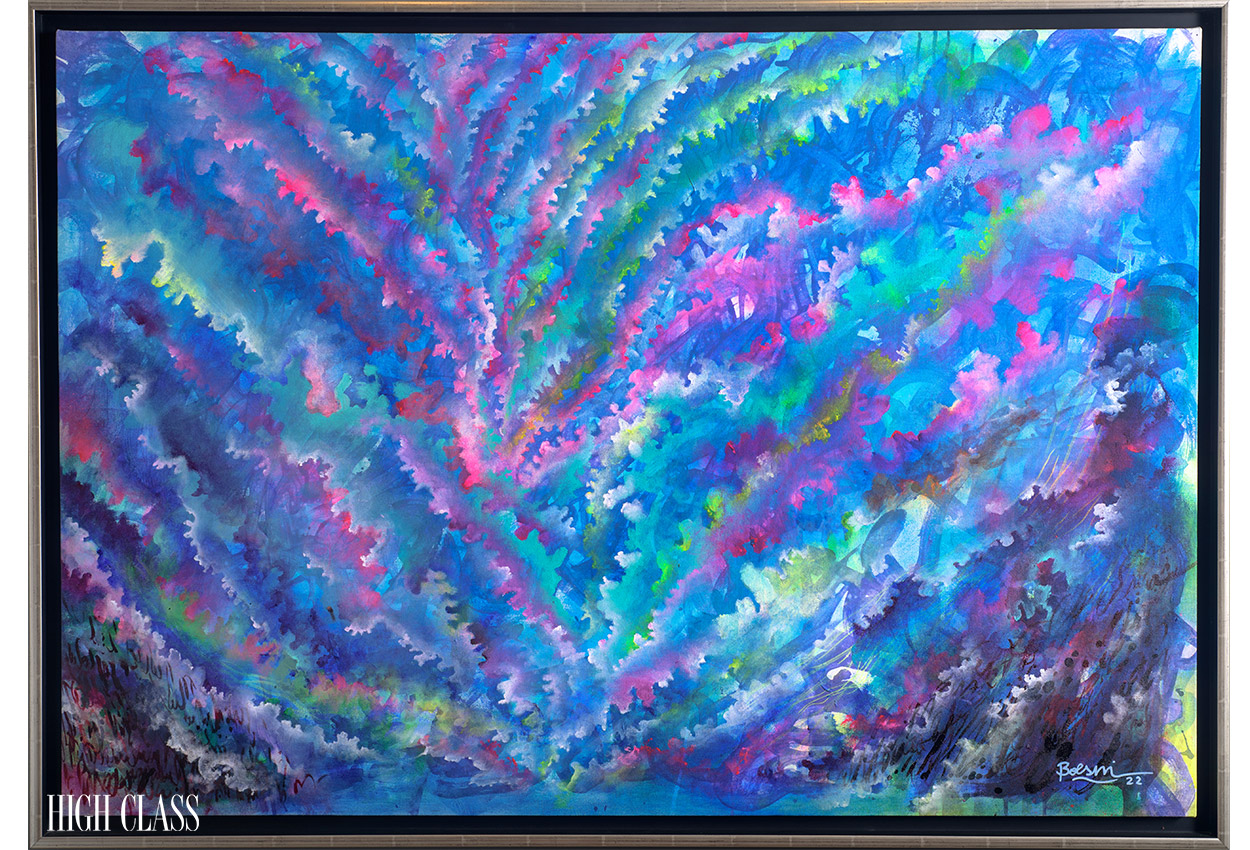
In the first exhibition, Unidigital, Boesmi presents sculptures and paintings created in Madrid, where he resides part of the year, continuing his exploration of post-digital painting. Here, the works are distinguished by their use of color and the need to express the forces at play between everyday experience and our relationship with technology and nature, for which he primarily employs abstraction.
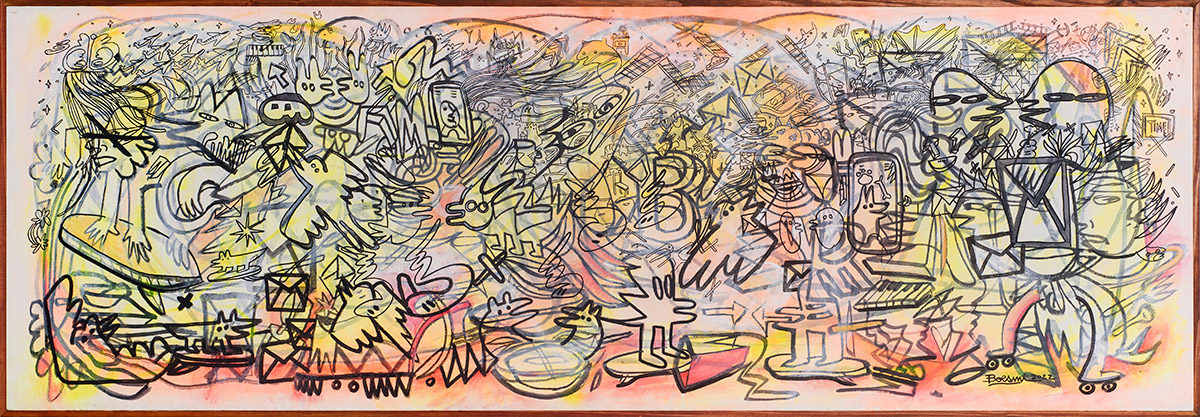
The second series, entitled Imaginary Graffiti, was conceived in New York in 2007. In it, the graphic component is present in large masses of iconography, signs, and symbols that converge in agglomerations of information to be explored and decoded visually. For this, the artist used a more monochromatic palette.
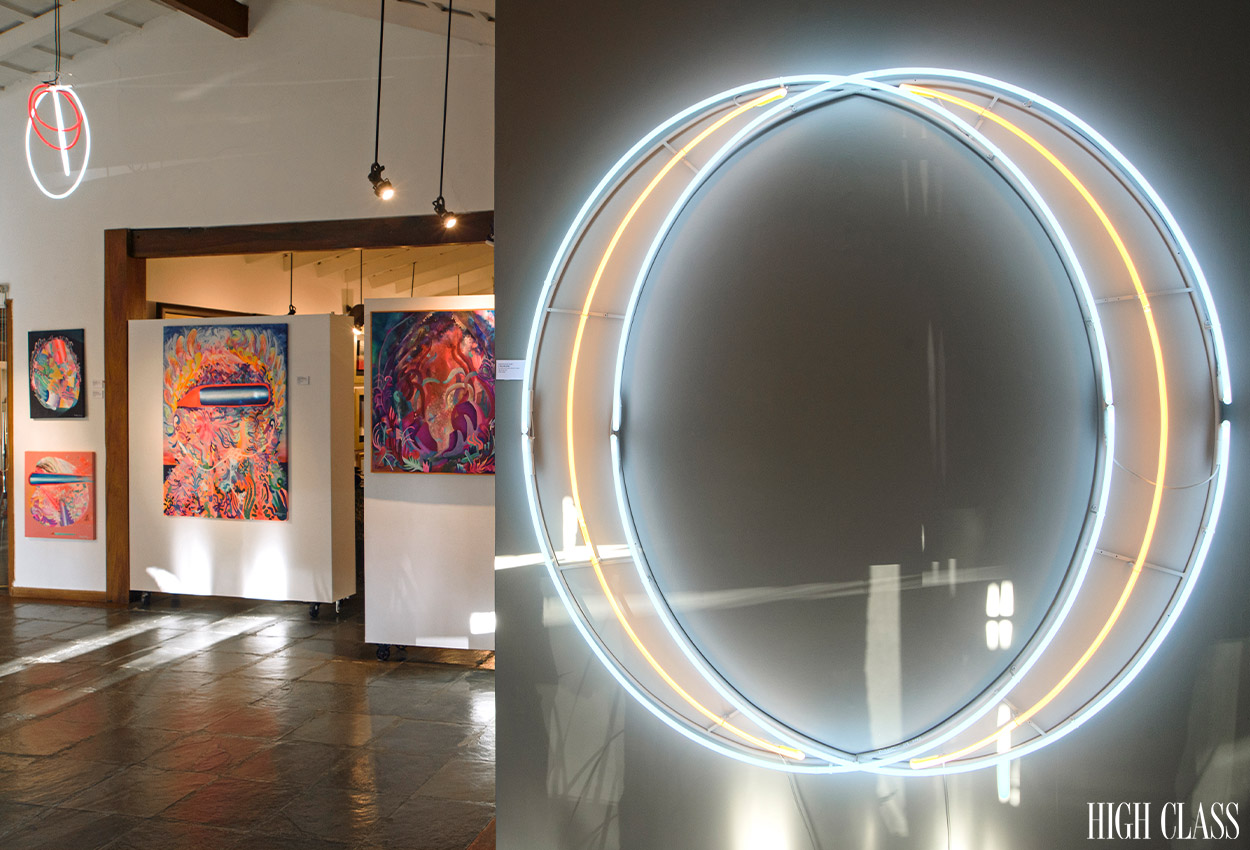
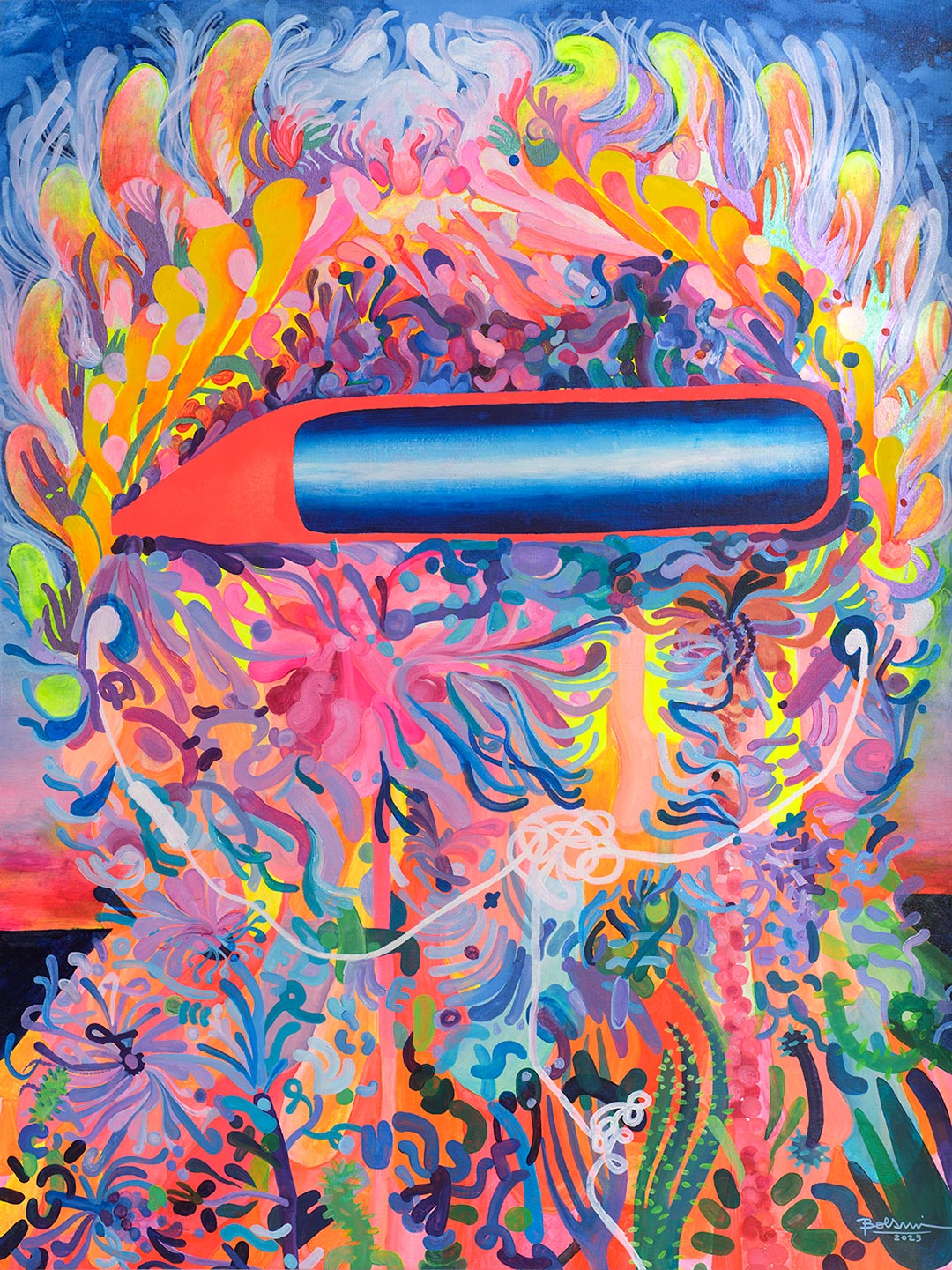
In parallel, Sebastián also created videos and sculptures that complemented the staging and served as relational hinges between one story and another.
Before returning to Spain, where he will begin a doctorate in Fine Arts at the Complutense University of Madrid, he took some time to explain in detail this transition between formats and expressive media. “Contemporary creation must be aligned with a series of thoughts and structures that relate to the world we live in,” says the artist, who maintains that art, in addition to communicating feelings and emotions, can express how we see our surroundings today.
Contemporary creation must be aligned with a series of thoughts and structures that have to do with the world in which we live
You are going to start a PhD in Fine Arts.
– At the end of June, I'm returning to Spain to begin a PhD in Fine Arts at the Complutense University of Madrid. I completed a master's degree there a few years ago in Contemporary Art Research and Creation, which delves into the investigation of artworks, discourse, and concepts to foster the creative process. Contemporary creation must be aligned with a series of thoughts and structures related to the world we live in. Therefore, it's important that art, in addition to communicating feelings and emotions, expresses things that others can also interpret and share about how we see the world today. It's beneficial that the artistic phenomenon has this kind of content and that the artist is able to speak about it.
What dialogues do you propose in this exhibition?
– Several things. Mainly, these are videos that at first glance appear to be made with Artificial Intelligence, but they're not. They were made with human intelligence and heart, because these videos originated from one of my paintings and a collaboration with a Paraguayan musician named Javier Rodríguez, who composed a piece specifically for the work, and a digital animator from Colombia, Camilo Moreno. So, we animated the video based on the painting and the music. The music gave it that rhythm, that cadence, and we worked frame by frame, all by hand, like a large collage. The result was something very interesting and called into question this whole AI boom, a topic that's been discussed quite a bit lately.
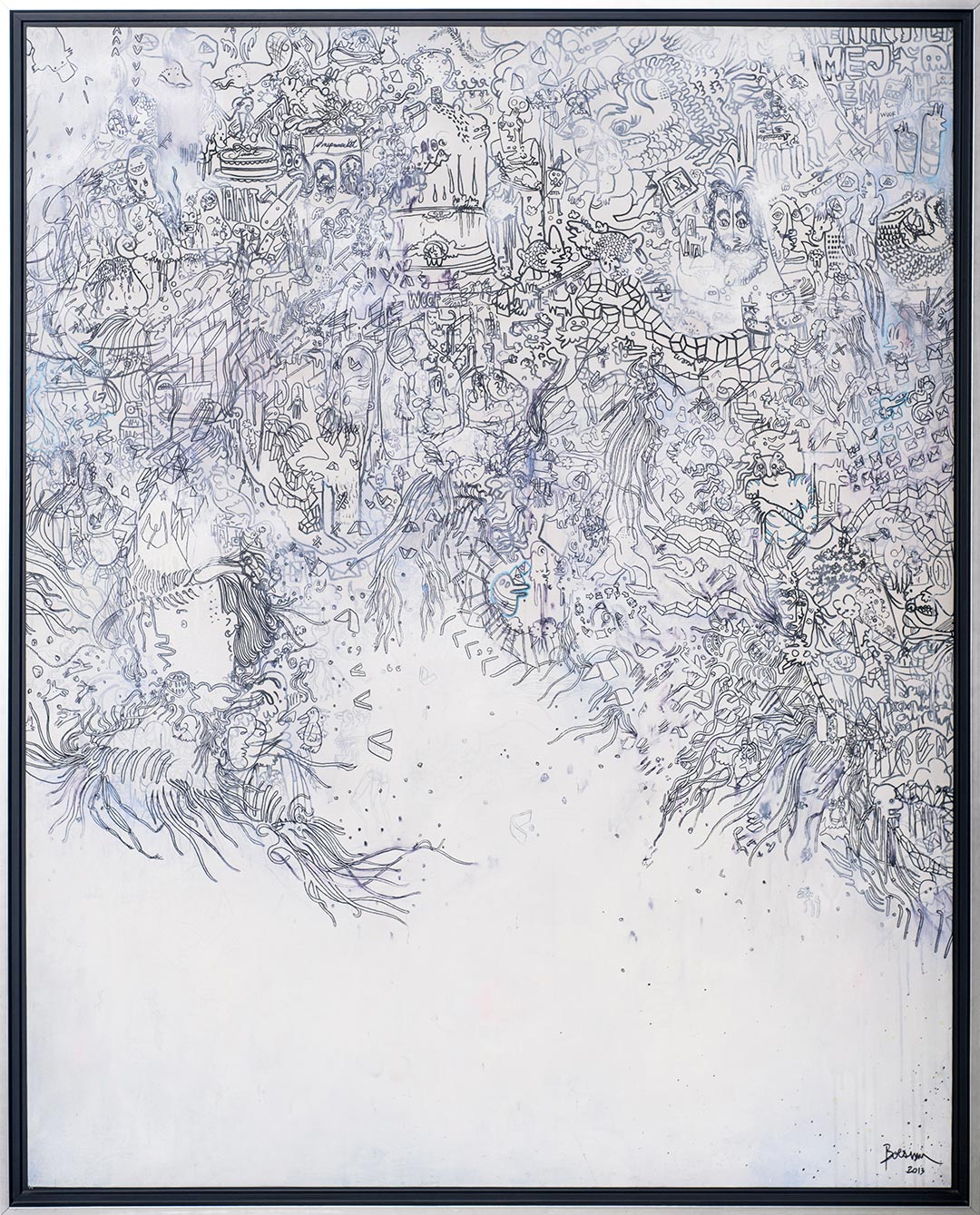
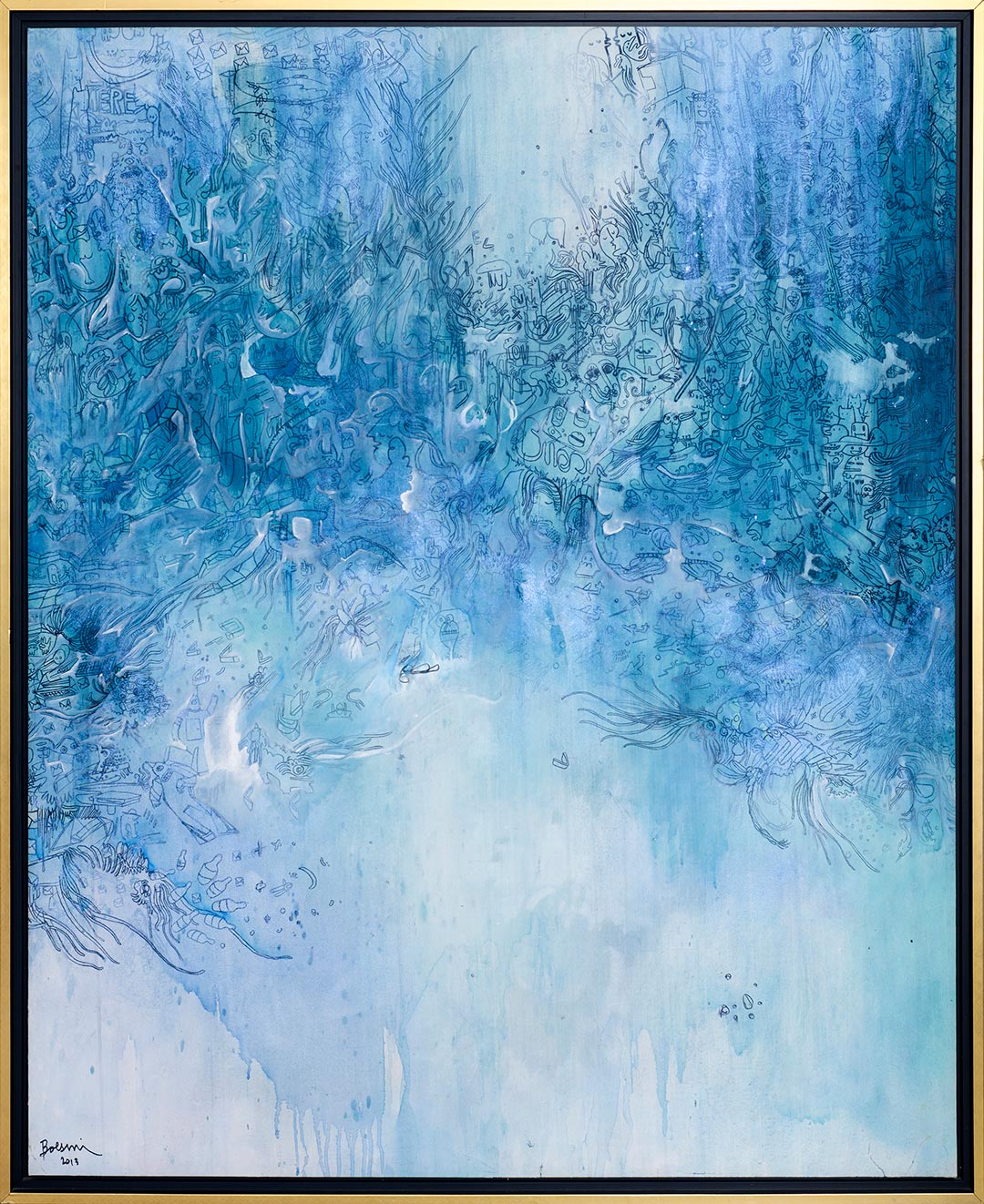
Working on a series takes a lot of time, and so does designing an exhibition. How did you anticipate this debate?
– We've been working on this project for over a year, and I think that's mainly because the artist imagines the future from the present. On the other hand, the creator isn't looking for the prey itself, but rather its shadow. Do you see what I mean? We don't yearn for the prey itself, but for what it projects, what it reflects; we always think ahead, we use a lot of metaphors.
So, in a way, as artists we feel a bit of what's going on and we investigate—what we were just talking about—to try to understand a bit of the fabric of how things work in art, culture and the world, and so you take risks and do things.
Like video art?
– Video art is something I've been doing since I was very young. When there weren't even camera phones, I would go out and make my videos; in fact, I won the Henri Matisse Prize with a recording in 2009, and then I stopped. Now I've picked it up again, but also, as I was saying about questioning Artificial Intelligence from a critical perspective, I wanted to address the issue of how we use electronic devices. I'm interested in this digital work being displayed on the screens in our homes, and in television, which we all have in our houses, serving not only to watch content but also to experience digital works that are harmonious, organic, fluid, meditative… and even spiritual, I would venture to say. Above all, I'm interested in art expanding to other mediums, not just to walls or any place to install conventional works, but transcending to our screens, which we live with all day long.
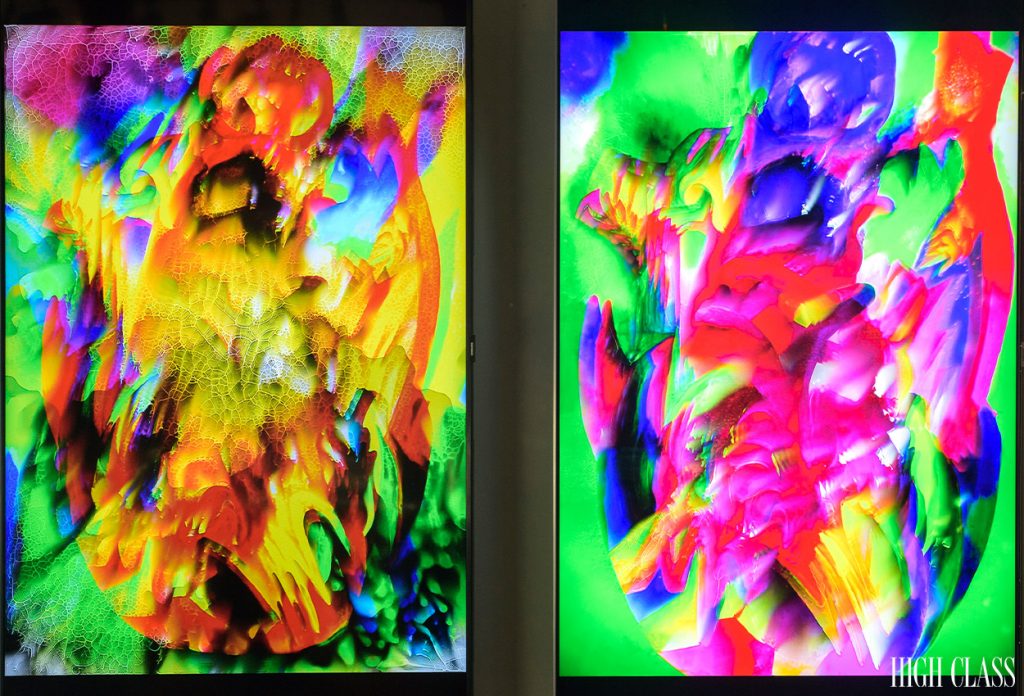
What else can you tell us about this proposal?
– It has a print run of 15 copies per video. Yes, that's not many. Electronic technology, digital technology, tells you about thousands of users connected all over the world, so it itself demands that you make something with many copies, but I believe that things should be kept somewhat small.
Despite the quantity, we were surprised to sell a large portion on the opening day of the exhibition, and in Asunción—this isn't just my opinion, but also that of my critic and gallerist—video art has never been sold commercially. It's the first time in the country's history that this has happened, and for me, that was very exciting because we're opening a new market, a type of collecting that allows us to reach other places. And ultimately, that's what we creators want: for the work to expand, to evolve, and to change, even slightly, how we're used to being and seeing things.
What is it like to sell something intangible?
“We’re part of a very materialistic culture, and as an artist, I’m interested in my work being in collections, in people owning it. I’m aware of our market, our prices, and we decided to make the videos accessible precisely to encourage this exchange, and to create that exchange, you have to give people the opportunity to own it. It was many hours of work on a computer, with the software, the synthesizers, the equipment, and I thought, ‘I could use this time to make a large mural, for example; however, I’m working on something intangible.’ Many people told me that this wouldn’t sell very well here, but I believe people know when something is different.”
I'm interested in art expanding to other containers, not just to walls or any place to install conventional works, but transcending to our screens, with which we live all day long.
And with this art you reach a new audience…
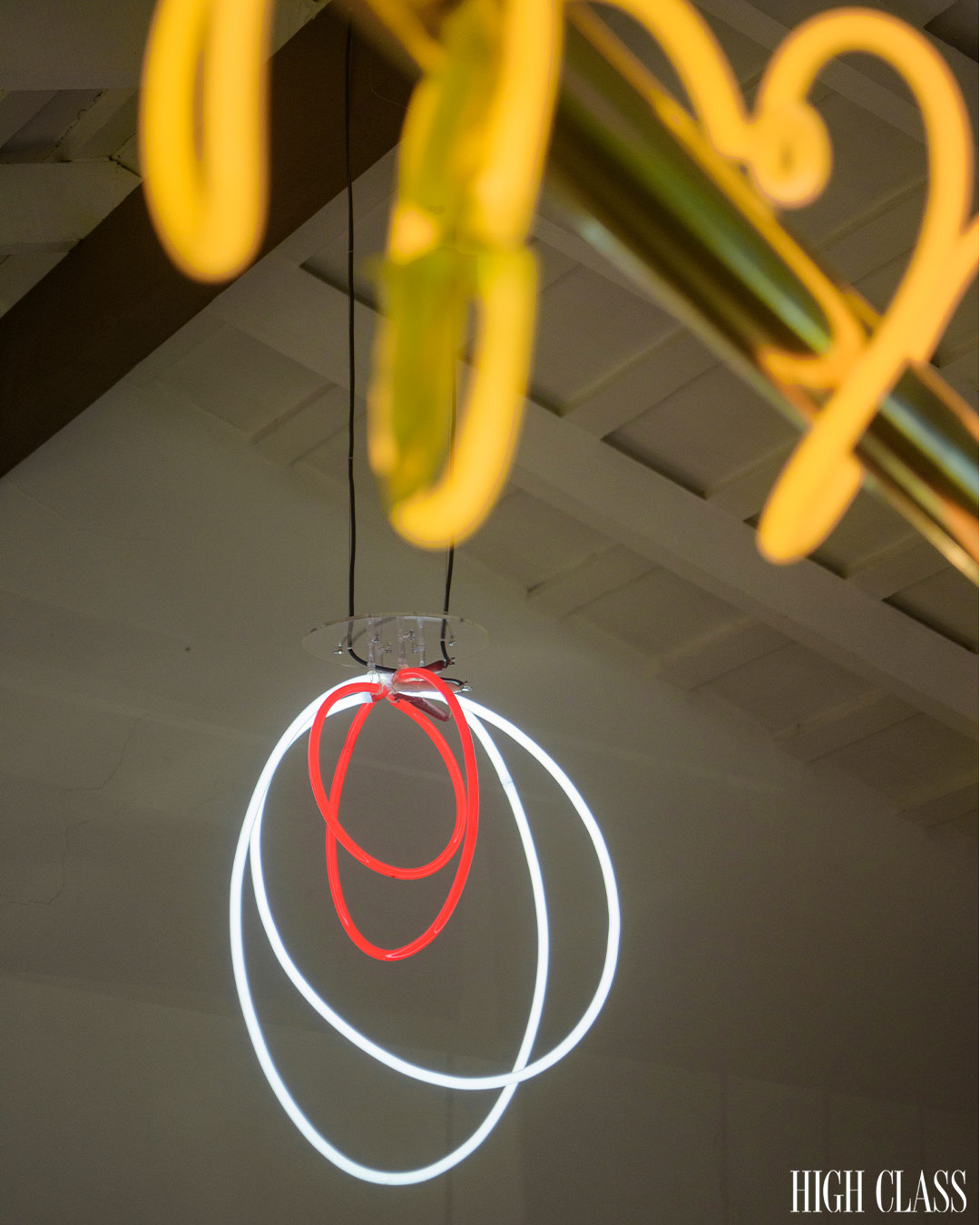
– Absolutely, and not just through digital art and the neon sculptures I create. Simply collaborating with other artists opens you up to a new audience. We'll soon be exhibiting these videos in Buenos Aires at the New Festival Token, a crypto art and NFT music festival. I'm also opening myself up to that audience, the one that consumes this kind of work, whether because they're younger or because it's something new and different. What's different always breaks the mold.

What does it mean to you to be an artist?
– Life is the best art school; artists absorb everything to give it new interpretations. We search where there's nothing to see, and that also ties into the idea of changing the inherent meanings of things to turn them on their head and create something new. It's like semiotic alchemy, with words, concepts, and ideas that are in your head; there are many things connected to each other. For me, that's important because it's the matrix of everything, and I nurture those ideas through my experiences, because that's what makes me grow. There's no other way. Through dialogue, communication, and encounter, you grow, creativity is nourished, and the ability to change meanings increases because you see more things and understand the different worlds and audiences that exist today. In a way, you evolve.
Life is the best art school; artists absorb everything to give it new interpretations. We search where there is nothing […] to find something new
Just like your work did.
– In my work, nothing is static, and rhythm is paramount. It's a very distinctive style, drawing on the collective imagination, icons, and music. Sometimes it's ironic, and at the same time, vulnerable. It's fresh, expressive, colorful, and above all, a body of work that never gets boring because you're always discovering something new.
CITIZEN OF THE WORLD
She was born in Salta, Argentina, and moved to Asunción in her early years, where she completed her primary, secondary, and university studies. She currently lives and works between Paraguay and Spain. She has also lived in cities such as Miami, New York, Johannesburg, Amsterdam, Berlin, Paris, and Barcelona, where she met many artists and attended countless exhibitions that enriched her artistic vision.
